When a physician or non-physician provider treats a patient, the patient’s conditions and treatments are then communicated to insurers using the language of the Current Procedural Technology (CPT) coding system, the first edition of which was produced in 1966 by the American Medical Association (AMA).

The federal government eventually granted copyright royalties for the CPT system to the AMA, which in 2011 represented approximately 15% —a vastly smaller percentage than decades ago—of practicing physicians in the United States. It was sort of a “backroom deal” for one of America’s most-prominent lobbying forces (the AMA spent an estimated $468 million across the nation from 1998 through late 2022 to influence legislative decisions). It’s been eight years since the AMA has published membership numbers; and many American physicians have disagreed with decisions by the organization’s leadership. It would be interesting to see what the membership numbers are today.

Some years ago, the AMA apparently worked out a deal with the Accreditation Council for Graduate Medical Education (ACGME) to be able to forward information about every doctor who entered an ACGME-accredited training program. The AMA would store that information in its Physician Masterfile, using Medical Education (ME) numbers as identifiers.” Most physicians were unaware of this; it was all automatic.

The AMA can sell access to that Masterfile in the form of a license to anyone willing to pay for it.

IQVIA—a multinational, multibillion dollar contract research organization (CRO) that has fused information technology with clinical research and trials—is one such buyer. IQVIA is also a buyer from “payers” (insurance companies) of the data they have received from doctors in the form of CPT codes. Not stopping there, IQVIA buys information from pharmacy chains (the major ones, like CVS and Walgreens), which make big money by selling prescriber and prescription data.

NOTE: The prescriber is identified by the ME number.

IQVIA then “mines” the purchased raw information. To use IQVIA’s language, they apply human data science and health benefit analytics to the data through their business intelligence tools. They slice it; they dice it; and they process it to create a product.

The pharmaceutical manufacturing giants want that product and they pay billions each year to the IQVIAs of the world to have it. It’s informational “gold” for their glossy marketing mailers sent to doctors’ offices everywhere.

Any doctors reading this will now understand how they have become recipients of those voluminous, tree-destroying, informational mailers from pharmaceutical companies who somehow seem to know something about their diagnostic and prescribing habits.

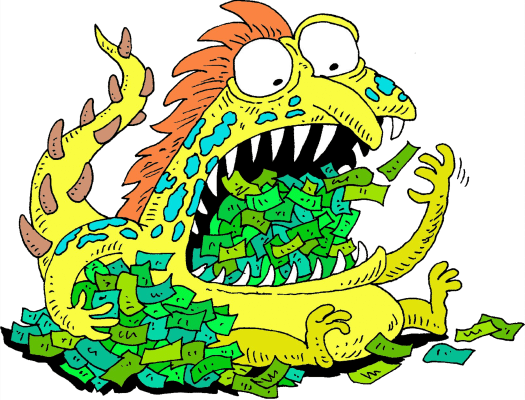
Does this smell “off” to you? Maybe it has the distinctive stench of one of those giant dragons spawned in the Great Swamp of American healthcare.

There are many such dragons in that Great Swamp—a strange ecosystem inhabited by creatures with great maws for swallowing money without doing a thing for the sick that can possibly justify the overhead they add.

What can the doctor who’s alarmed at having played an unwitting part in feeding one of these dragons do about it?

It’s possible, although not easy, to opt out of having supposedly private information peddled and packaged as described above—which is the American healthcare system’s “default” setting for doctors. To escape, doctors must say explicitly that they want out. They should visit the AMA-provided website to stop feeding the dragon. Be forewarned—the process is a test of patience and resolve.

You might also think to send this blog to delegates of the AMA who are meeting at the time of the publication  of this blog in Chicago, at the swank building where the AMA rents from   Beacon Capitol Partners for $9.3 million.   No wonder the dragon keeps needing more gold.

History approves those who come together to slay rapacious dragons. Contrary to modern fables, they’re not benign. They’re not named “Puff” or “Eliot,” and because they have the bottomless appetite of “Smaug,” they can never be trained to stop adding crushing overhead to the American cost of healthcare.
Full transparency and De-consolidation of PBM Monsters are the Remedy to Drive Pharmaceutical Prices Down, and Remedy Medical Supply Shortages
Over half of Americans have skipped filling a prescription because of costs.
Large pharmaceutical companies and the inflated prices and portion of the market that some hold for a particular drug beyond a reasonable patent period is a scenario familiar to most Americans and must be addressed. Lesser known but at the root of the problem of monopoly power and high prices in the pharmaceutical world are companies that don’t innovate and don’t manufacture, namely pharmacy benefit managers or PBMs.
The public’s awareness of these drug intermediaries or middlemen and their effect on prescription drug pricing has grown exponentially over the past decade. This awareness has increased the will of state and federal lawmakers to do something about the lack of transparency and competition enjoyed by PBMs.
Another middleman contributes to inefficiencies and increased costs, and you’ve probably never heard of them. As we built awareness of the issues related to PBMs, we must now do the same for Group Purchasing Organizations (GPOs). GPOs are lesser-known corporate middlemen who control the healthcare supply chain in hospitals and other medical institutions, driving up overall health care costs. This section will discuss the respective roles of PBMs, GPOs, and pharmaceutical companies in increasing costs and decreasing access in the healthcare space. Much like the last section, Free2Care will focus on increasing transparency, unwinding perverse incentives, and creating changes that lead to more competition.
PBMs were created to help insurers contain drug spending for prescription medicines. They control formularies, utilization tools, and administer drug claims. They do this for Medicaid-managed care, Medicare part D, commercial payers, and large employers. Historically, they achieved this purpose and provided the value that was intended. However, since the PBM’s received the benefit of safe harbor from the Anti-Kickback statute in 2003, drug costs have soared year over year.
The PBM market has consolidated with the six largest PBM controlling 95% of prescriptions.
Consolidation, coupled with complexity and opacity, has allowed large PBMs to pocket substantial revenue. Using questionable practices, they have driven companies that own (typically insurers) PBM’s to the top of the Fortune 500 top 20. This growth comes at the expense of all Americans, especially those who most need affordable medications: Those with chronic diseases.
Significant and questionable revenue streams and business practices of PBM include the following.
Spread pricing is how PBM retains a portion of the money paid to them by the third-party payer meant for the pharmacy. In Ohio’s Medicaid program alone, the state found two of the nation’s largest PBMs to have helped themselves to $224 million per year. These PBM were charging the state six times the going rate for their services.
Multiple other states have followed Ohio’s lead in uncovering this practice in the Medicaid space. The spread phenomena are not limited to the Medicaid space but spills into government-led entities such as counties, schools, and employers.
Direct and Indirect Remuneration (DIR) fees result from a loophole in Medicare regulations. DIR fees are charged to pharmacies as a clawback based on the PBM’s unpredictable and inconsistent quality metrics. Clawbacks can happen months after a patient receives their medication, leaving pharmacies at the mercy of PBM.
Some PBMs have close ties to or even own a large pharmacy chain. There is no transparency in what these PBMs pay their big-box pharmacies vs. independent pharmacies for meds, what they retain via the spread, or how much they charge for DIR fees. It is a perverse incentive to overpay their associated pharmacy chain entities and underpay independent pharmacies. Some are doing this.
This practice can destroy the over 20,000 small businesses and independent pharmacies that are highly trusted by the patients who use them because of the PBM practices above.
Specialty and Mail Order Pharmacies In addition to the other vertical integration mentioned, PBMs’ have their own specialty and mail-order pharmacies. Specialty pharmacies are created to deliver drugs to patients that must remain in certain environmental conditions. “lock up” huge chunks of market share by contractual arrangements with the government’s Medicare and Medicaid programs, or their contractual arrangements with, ownership of, or ownership by insurers, and even with the 340-B program participating hospitals, as detailed in section A. With exclusive access to such large shares of the market, price manipulation and other shenanigans become not only irresistible, but essential to conceal. Hence the resistance to investigation.
Worse yet, the 3 big PBM Express Scripts, CVS Caremark, and OptumRx took in over 70 percent of mail order prescription revenue in 2019, to the tune of $113 billion and yet often sent medications that were unviable, resulting in declining health conditions. Sometimes, meds were sent late or damaged to cancer or insulin dependent patients.
Look at those conflicts of interest!
The vertical integration harms patients directly while increasing the monopoly power of those PBMs associated with large pharmacies and, in turn, compounds the conflicts of interest that potentially harm patients.
We echo Senator Wyden’s call for the FTC to investigate how DIR fees are an anti-competitive tool. We also support the CMS proposed rule to allow DIR fees to pass through to medicare beneficiaries in the Part D space.
Utilization tools such as prior authorization, step therapy, and non-medical switching are administered by PBM and prevent patients from medications that have stabilized their disease. These tools often create health problems for patients and time-consuming tasks for physicians.These tools form a revenue stream as delays in needed care equate to PBM retaining capital.
Kickbacks An astounding portion of the money flow going to PBM has no transparency, as demonstrated below. This is especially true of “rebates,” also known as kickbacks.
The PBMs were granted an exemption from anti-kickback statutes by HHS in 2003. PBMs were allowed to accept monetary remuneration from pharmaceutical companies from that point. Their role as formulary makers poses an enormous conflict of interest. This erodes trust in our medical system. The making of the formularies is shrouded in secrecy. PBM euphemistically calls these kickbacks rebates.
The legalized kickback system creates “rebate walls.” Pharmaceutical companies outbid one to become sole or near sole suppliers of many medications. Note that BIG pharmaceutical companies would be more likely to afford kickbacks that have been increasing. This effectively makes competition for smaller manufacturers more difficult.
My my… hard to see the money and where it’s going. Show us the money!
Insulin and List vs Net Price
Choosing just one high-profile essential medication, insulin, The Senate Finance Committee, working in a bipartisan manner in 2021, uncovered a portion of the tangle for the unprecedented rise in the cost of insulin.
The tangle could be summarized in a simplified chart for a particular essential medication: Insulin.
All 3 major insulin manufactures have graphs just like this.
Net price is what the pharmaceutical company collects. List price, what the patient and or third party pays, is the net price plus all the opaque kickbacks and fees collected by the mediators in the market. The lion’s share of insulin cost tripling comes from the PBM middlemen and insurers themselves. However, we must point out that manufacturers are willing to play in this broken marketplace and, as a result, they profit from the kickbacks that drive monopolies in production. As seen in the senate finance report, it seems as though the three companies that make the bulk of insulin set their prices based on one another. And it is not necessarily the price that companies need to make profits. It should be evident that the drugs are chosen to be ‘covered’ by insurance (i.e., those on the formulary, maybe (and likely are) covered because a sizable pharmaceutical company paid the kickback to get them there. It should also be evident that this can occur for every drug for which there could be competition. The growth in the list price is feeding corporations that do no research or manufacturing.
The horizontal and vertical integration that has occurred between large pharmaceutical chains, insurance companies, PBM, and specialty pharmacies, allow these companies to have the revenue streams mentioned above to consolidate further, knock competition from smaller PBMs, smaller manufacturers, independent pharmacies, and others out of the market, and allow increased monopolization by large pharmaceutical firms themselves.
It is not just PBM that can collect kickbacks in the healthcare space, but also Group Purchasing Organizations (GPO). GPOs write the contracts that facilitate the movement of all supplies—masks, medical devices, sterile solutions, and medications —into hospitals, hospital-owned clinics, and nursing homes. This represents a staggering source of revenue, given that supplies can account for up to 40% of a hospital’s overhead, second only to payroll. Estimates are 300 billion per year. In 1972, Congress had passed anti-kickback legislation in the healthcare arena to protect patients. In 1987, the GPO was given a “safe harbor” exemption from the anti-kickback statute. In 2003, the HHS extended this to PBMs. Rules placed oversight on the kickbacks: They were to have been limited to 3% or less of the purchase price of the products. The HHS OIG has never exercised its responsibility for ensuring the kickbacks remained at or below 3%.
Even if rules enforced the 3%, they still perversely incentivize PBM and GPO. They select a more expensive product for their contracts and formularies. GPOs, like PBMs, have become consolidated: A GAO report found that in 2012, six companies (now consolidated into four) controlled 90% of this segment of the supply chain.
The cost burden of kickbacks has tended to reduce the number of manufacturers for supplies and medicines. The wealthiest manufacturers can afford the kickbacks. Smaller competitors have tended to disappear or never enter the market in the first place. The effect of single or few suppliers for many products is a brittle supply chain that has led to over 700 products in shortage. Hundreds of drugs and solutions —chemotherapies, antibiotics, and anesthetics—have been on the list of known deficiencies for years, decades, in some cases. Most are familiar; with generic medications, which should be plentiful and inexpensive due to great competition. The fact that shortages for generics exist is a red flag that the root cause is a distortive factor, like kickbacks.
In a recent Zoom meeting with legislators from the state of Maryland the representative for the PBMs said that if a particular law regulating PBMs was passed, they would only pass the expense back on to the employer. They will do whatever they can to not lose revenue, even as patients are harmed.
Telling that with pressure on for PBM and more aware of the kickbacks, PBM have started to diversify again horizontally into the GPO space.
How much do you know about the American Board of Medical Specialties’ Maintenance of Certification and the American Board of Internal Medicine’s recent 25% fee increase in a single year for their new MOC alternative, “Longitudinal Assessment?”
We’re trying to find out, so our elective representatives, state medical societies, and the IRS can know, too.
If you haven’t done so already, please take our anonymous survey and share it with your physicians colleagues by email or social media. (It takes just three minutes to complete).
Medicine is and will forever be in evolution.
Corporates and the government tell us they have a solution.

 Remember when: In the past, larger than life were physicians?
 7 to 15 years of training put us in charge of patients life and death decisions.

Once upon a time there were groups that spoke for the docs.
Sadly, many are polluted and speak for money, the corporates and MOC.

In 1962 on the eve of Medicare launch,
Dr. Edward Annis tried to staunch.

He stood bravely in  Madison Square Garden in front of empty seats.  (1)
The press covered the politicians… docs and patients got tricked… The government and corporations got the treats.

Dr. Annis told us: Medicare real insurance it ain’t.
He was correct, Medicare became a path for greedy corporate middlemen to taint.

What happened to the quality medical picture? In came slick middlemen saying "coverage is care"
Over time… patients were sent packing to… Who knows where?

And the physicians who thought with our training would always have a say.
Many stopped speaking or caring, just took the check: We too went away.

The patients remain and tell us they are in pain and  distress.
United, Optum PBMs, big hospital systems, private equity have made medicine a mess.

Not just physicians but PTs OTs, RTs, and those who bedside nurse,
have fallen and suffered at the hands of the corporate power of the purse.

The relentless corporates don’t give a fig.
All they care to do is become ever more big.

Does your Congressman or Senator care about all this pain?
Or is it easier to listen to those with BIG money for a campaign?

You and loved ones will suffer and some will die.
While CVS, Centene, Blue Cross and Practice Fusion gobble more of the juicy healthcare pie.

What happens when the last doc, the last good nurse Falls?
Are corporate middlemen going to care for you all?
There will be blood on their hands and splattered on the wall.

It’s been over 50 years of our government sanctioning medicines poison: The corporate pill.
When will you stand up against this vile swill?

You took the Hippocratic oath,  you can’t take it back.
We gotta do more or risk being called a quack.

Stand speak and deliver to make healthcare attainable,
with choice, transparency and competition to make it sustainable.

Patients, help us become free to care for you once more.
Help be a part of the new healthcare ecosystem to even the score.

Patients, tell the government to earn your trust.
Make the FTC get in there and bust bust bust!
Tell your lawmakers stop listening to corporate drivel; that’s a must!
Put patient’s needs first; leave PBM, GPO, insurers and big hospital systems in the dust!

Stop listening to wealthy rent seeking corporate parasites for the wrong solution.
Unwind these parasites perverse incentives for real evolution:
Direct pay, innovation, small companies are the new revolution.

Thanks to Dr. Seuss, a non-medical doctor for inspiration. His quote from The Lorax could lead to a new medical landscape for our nation."Unless someone like you cares a whole awful lot, nothing is going to get better. It's not."
Dr Edward Annis is the former president of the AMA, and was a Florida surgeon.
After President Kennedy had a full house at Madison Square Garden to explain the pitfalls of the King Anderson Bill which later passed under President Johsnson and became Medicare, Dr Annis was refused equal time to counter the President’s arguments. The President explained “we do not affect the freedom of choice, you can go to any doctor you want.”[2]
Dr Annis told America that the intended Medicare would cover “millions who do not need it, heartlessly ignores millions who do need coverage. It is not true insurance. It will create an enormous and unpredictable burden on every working taxpayer. It offers sharply limited benefits. It will lower the quality and availability of hospital services throughout our country.” ” IT WILL STAND BETWEEN THE PATIENT AND HIS DOCTOR.”
He warned that cost-plus financing of Medicare would doom it to bankruptcy and trigger destruction of the doctor-patient relationship. “This bill would put the government smack into your hospital, defining services, setting standards, establishing committees, calling for reports, deciding who gets in and who gets out, what they get and what they do not get, even getting into the teaching of medicine.”
I am not advocating the destruction of Medicare. It’s been here since the 1960’s. We have to start where we are. I am pointing out that having a middleman, a third party paying for care in ALL cases, even when that middleman is the government… this model… the model of COVERAGE will lead to unnecessary costs and profiteering at the great expense of all Americans.
Meanwhile, the model of COVERAGE will cause the continued destruction of the quality of CARE, and the destruction of the practice of medicine
This poem was first read at the 2021 Mitigate Partners “Demystifying Healthcare Costs” Conference
Kudos to board member Marion Mass on her recent letter to the editor of the Wall Street Journal 15 Apr 2022 highlighting the way Pharmacy Benefit Managers contribute to the high cost of insulin (and many other medications) for patients:
“Credit to the editorial board for alluding to the role of PBMs in America’s costly and dysfunctional prescription-drug debacle. The “rebates” collected by the PBMs are more accurately called kickbacks, as the PBMs enjoy an exemption from the antikickback statute.
Given that PBMs create formularies, which are the lists of drugs covered by third-party payers, pharmaceutical companies can pay a kickback to functionally purchase formulary placement, which amounts to market share. This obscene conflict of interest has been plainly stated at congressional hearings. Insulin and every other medication market begs for competition. We won’t have it so long as the market allows drug makers to purchase their market share through legal kickbacks.
The kickbacks account for as much as 80% of the cost of insulin, as highlighted in a 2021 Senate Finance Report. The disingenuously named Affordable Insulin Now Act doesn’t lower the cost of insulin or any other drug, because the bill does nothing to make the PBMs accountable.”